Church SEO
How to run a bilingual church without a translation department.
I can tell you exactly how a second language dies at a church, because I have watched it happen the same way four or five times now and the sequence never varies.
It starts well. Somebody bilingual on staff, or a volunteer with a heart for it, translates the important things. Then a busy week arrives and the Spanish page goes out on Wednesday instead of Sunday. Then a month where it is machine-translated because nobody had time to read it. Then it stops.
And here is the part that should bother you most. The family who noticed will never mention it to you. They will just quietly understand where they stand, and they will be polite about it at the door.
Pastor, I am not writing this from a high place. I helped build one of the versions that stopped.
And I want to name what that costs, because churches tend to talk about a second language as an act of generosity. It is not. It is the difference between a family belonging and a family being hosted, and those two things feel completely different from the inside even when the welcome at the door is identical.
It is not a budget problem
Every church I meet assumes the blocker is money, and it almost never is. The blocker is that the second language is built as an extra step at the end of a process that is already running late.
Anything at the end of a late process is the thing that gets dropped. That is not a character flaw in your staff, it is arithmetic. If Spanish is what happens after everything else is done, Spanish will happen on the weeks when everything else got done, and there are not many of those weeks in a church.
So the fix is structural rather than financial. The second language has to be produced at the same time as the first, from the same source, or it will always be the casualty.
Translation and adaptation are not the same job
This is where most of the quality problems live, and it is worth being precise about.
A translation moves the words across. An adaptation moves the meaning across, in the register a person in that language actually uses at church. Those produce different sentences. A devotional that is technically correct Spanish but reads like a manual has told your Spanish-speaking members something about how much of your attention they got, and they will read that message loud and clear whatever the words say.
There is a tell I look for now, and it takes about thirty seconds. Open the second-language page and find the church's own words about itself... the mission statement, the what-to-expect page. If the English version has warmth and rhythm and the other one has correct grammar and nothing else, you are looking at translation. The warmth is the first thing lost and the last thing anybody checks for.
The practical test I use is simple. Would somebody who speaks only that language know this was written in another one first? If yes, it is a translation and it is not finished.
What actually works
Three things, and none of them require a department.
One source, both outputs, same week. The sermon is the source. Everything downstream — the devotional, the study questions, the blog post, the family question... gets produced in both languages in the same pass, not translated afterward. Same week, every week. Parity is the whole point: a second language that is three days behind is a second-class language and everybody can see it.
One native speaker, reading not writing. You do not need a bilingual staff member who can write everything. You need somebody who speaks it natively to read what was produced and fix what sounds wrong. That is an hour, not a job. It is the difference between adaptation and machine output, and it is the single highest-leverage hour in the whole process.
Tell the truth about how it is made. If AI drafted it and a person reviewed it, say so somewhere a curious member can find it. I have never seen that disclosure cost a church anything. I have seen the absence of it cost a church a great deal when somebody worked it out on their own.
What this buys you that you were not expecting
Two things, and the second one surprises people.
The obvious one: your Spanish-speaking members stop being guests in their own church. Sixteen of seventeen pages mirrored, the same week, means a mother can hand her phone to her own mother and not apologise for what is on the screen.
The unexpected one: search. Almost nobody in your city is publishing genuine Spanish-language content about faith, grief or forgiveness with a real church behind it. The competition for English is brutal. The competition for the other languages your city speaks is frequently nobody at all... which means the second language is often where a church becomes findable first.
I did not expect that when we started. I assumed the second language was the generous thing you did once the English was working, and it turned out to be the place with the least competition and the most need. Which should probably have been obvious, given who moves to a city and starts looking for a church in the first place.
Start smaller than you think
If you cannot do everything in two languages, do not do everything badly. Pick the surfaces that matter most to a person deciding whether to walk in: service times, what happens when you visit, and the weekly devotional. Do those three in both languages, every week, reviewed by a native speaker.
Three surfaces done consistently will serve your people better than fourteen done sporadically, and it is the sporadic version that teaches a family to stop checking.
And be honest about which languages your city actually speaks rather than which one you assumed. Miami is not only Spanish. The answer is in your own attendance and in the census, and in both cases it is usually a broader list than the one the church has been planning around.
And if your church has already had a second language die once, say so out loud to the people it died on. Not as an announcement... just as an honest sentence to the family who noticed and never mentioned it. I have seen that conversation do more for trust than the relaunch did.
This is why Multiply produces both languages in the same pass rather than offering translation as an add-on. Not because it is clever, but because an add-on is a thing that gets dropped in November, and I have watched too many churches find that out the slow way.
So, Pastor, one uncomfortable exercise this week. Open your website in the other language your city speaks and read it as though you only spoke that one. How long before you could tell it was second? And who in your congregation already knows the answer? I would really like to hear what you find.
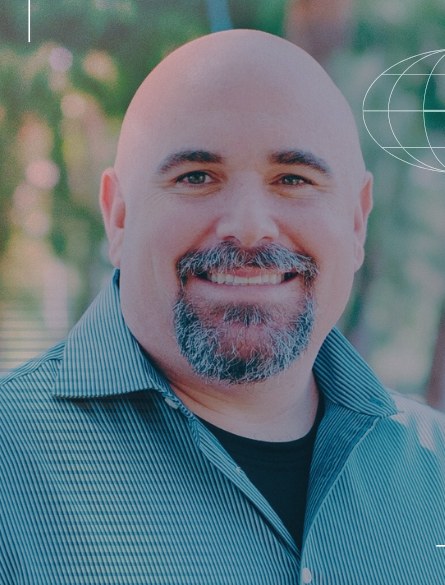
Founder of Humble Disruption and theChurch.digital. 25 years in church production, communications, and digital — and the builder behind Multiply. More about Jeff →