Digital discipleship
Your church app should be a table, not a second pulpit.
I shipped a church app once that I was genuinely proud of. Sermon archive, push notifications, a giving button, service times, a nice icon. We announced it from the stage on a Sunday and watched the install count climb all afternoon, and I remember thinking we had done something real.
Six weeks later I pulled the numbers. The only people still opening it were the people who had never missed a Sunday in their lives.
We had built a second pulpit and put it in everybody's pocket.
Pastor, I'm not writing that to be clever about somebody else's app. I built that one. I picked the features. I sat in the meeting where we decided the home screen should be the latest message, and nobody in that room asked what a person was supposed to do with it on a Wednesday.
What is your app actually for?
Start with the uncomfortable part. YouTube already has your sermon. And YouTube is better at being YouTube than your church will ever be... better search, better player, a recommendation engine, autoplay, and roughly a hundred thousand engineers who think about nothing else. If the job of your app is "somewhere to watch the message again," you have walked into a fight you cannot win against an opponent who does not know you exist.
So the archive is not the product. Fine. What is?
Look at the shape of the two objects. A pulpit faces one direction. It is built so that one person can speak and a room can listen, and that is a good and holy thing for about forty minutes a week. A table has chairs all the way around it, and the people in them can see each other. Different furniture, different job.
Most church apps are pulpits. Sermon on top, notifications going out, giving button on the side. Content flowing one way, forever. And content is one-way communication... it always has been. You can push it harder, schedule it better, design it prettier, and it still never becomes a conversation.
The phone is where the week happens
Your people are not on their phones because they are shallow. They are on their phones because that is where their week lives... the group chat, the calendar, the photos of their kids, the thing they read before they can face getting out of bed. The phone is the mission field, not the enemy. I keep meeting pastors who want to preach against it, and I understand the instinct, but you cannot scold somebody out of the place they actually live.
So the question stops being "how do we get them to open our app" and becomes something much more useful. What is on that phone, on a Tuesday, that they cannot get anywhere else?
At Christchurch Miami the answer is eight minutes a day. Not a broadcast. A short rhythm that comes straight out of what was preached on Sunday, in both languages the church actually speaks, and it lands in the morning before the day gets loud. Sunday becomes Monday morning. The tie back to Sunday is the whole idea... it is not a separate devotional product with a separate voice, it is their pastor's message, still talking.
That alone would make it a better pulpit. It is the next part that makes it a table.
Three to five people who can see you
Put a person in that daily rhythm alone and you have built a very nice private devotional. Put them in a circle of three to five and something different happens, because three to five is small enough that absence is visible. If you skip Thursday, three people notice. Not a leaderboard, not a badge... three actual humans who know your name and can see the gap where you usually are.
Forty people in a channel is a broadcast where nobody speaks. Three is a room where silence has a temperature.
What actually gets said in one of those circles is almost embarrassingly small. A sentence about the verse. A one-line prayer request. Somebody typing "rough morning, pray for me" before the school run and three people seeing it inside the hour. It isn't profound, and it isn't supposed to be... profundity was Sunday's job. This is the part where a person gets known on a Wednesday, by name, in a group small enough that they can't hide in it and don't want to. I've sat with pastors who wanted me to make that sound more impressive on a slide. It doesn't get more impressive. It just works.
And that is the thing a pulpit structurally cannot do, no matter how good the preaching is. I have watched churches try to solve loneliness with better content for twenty-five years. It has never once worked, and I have been in the room helping.
"But Jeff, our people won't use another app"
Honestly? They won't. Not if it's an archive. They already have one of those and it's called YouTube, and yours does not have the recommendation engine.
But notice what that objection is really saying. It isn't "we don't want to disciple our people midweek." It's "we have tried putting a thing on their phone and the thing was not worth opening." That's not a failure of nerve, that's an accurate read of the last app. Fair enough.
So here's the honest test, and it's uncomfortable: if you removed the sermon archive from your app tomorrow, would anything be left that somebody would miss? If the answer is no, do not ship an app yet. Build the week first. The app is the delivery, never the substitute for having something to deliver.
Every screen needs somewhere physical to go
One more thing, and it's the one I'd fight for. If the app becomes a destination, you have quietly started competing with your own Sunday. Digital complements the physical gathering and never replaces it, and that means every screen in there should have a room attached to it. The daily reading points at the group that meets Tuesday. The group questions point at the people who will be in the chairs. The prayer request reaches a human being who will actually call. The whole thing keeps handing people back to the building.
A good church app is a hallway, not a venue. It is how somebody gets from Sunday to Sunday without falling through the gap in between, and it should feel a little empty on purpose... because the fullness is meant to happen in a living room on a Tuesday night, not in a feed.
That's the same argument as taking a Sunday faith into a Monday-through-Saturday life, just wearing different clothes. The sermon was never supposed to end at noon. The app is simply the most honest place to admit that, because it is the one surface your people are already holding when the week starts pressing on them. And no, none of this is the machine discipling anybody... the system is a traffic cop pointing people at people.
This is the Grow movement of Multiply, and it is the least glamorous part of the whole system. No rankings to celebrate, no chart that goes up and to the right. Just somebody's phone buzzing on a Wednesday with a question their pastor already asked, and two other people answering it.
So, Pastor, open your church app right now and look at the home screen. Is it a pulpit or is it a table? And if it's a pulpit... what would have to change for somebody to want it on a Tuesday? I'd genuinely like to hear what you find.
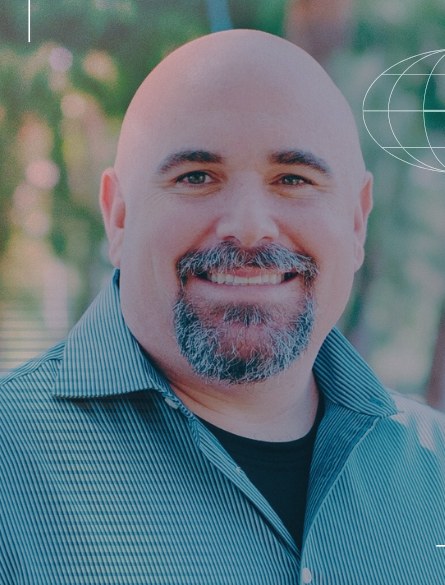
Founder of Humble Disruption and theChurch.digital. 25 years in church production, communications, and digital — and the builder behind Multiply. More about Jeff →