The Multiply framework
Digital makes physical better.
I spent about four years of my life arguing that online church was real church. I was good at it. I had the slides, I had the stats, I had the comeback for every objection a deacon could raise, and I won most of those arguments in rooms where winning was not actually the point.
What I did not have was a good answer to a quieter question, which somebody finally asked me after a session: so what happens when she wants to be baptised?
I did not have an answer. I had a platform.
Pastor, I am starting here because I think the whole digital-ministry conversation went sideways at exactly that point. We framed it as a fight over whether the screen counts. And while we were busy having that fight, the actual opportunity was sitting on the other side of the room, unclaimed.
Because here is what I actually believe now, after twenty-five years of building both sides of this: the screen and the room were never competing. We just kept scoring them against each other, and the scoreboard was the mistake.
The question that settles it
Every digital thing a church builds should have to answer one question, and it is not "how many people saw it." It is this: did this make Sunday, or the group, or the table better?
That is the whole grading rubric. A livestream that helps a housebound member stay part of the body on the weeks she cannot drive has made Sunday better. A livestream that lets forty comfortable families stay in their pyjamas has not, and no amount of view count changes that. Same technology. Opposite verdicts. The tool was never the thing being graded.
Once you grade that way, a lot of arguments simply stop. Is a church app good? Depends. Does it carry somebody from Sunday to Tuesday and hand them to three other people, or is it a second pulpit in their pocket? Is SEO spiritual? Depends... Does it put a real answer in front of somebody at two in the morning and then point them at a room full of people, or does it just move a number on a dashboard?
I want to be careful here, because this sounds like a productivity rule and it is not one. The reason the question works is theological, not operational. The church is people. It always was. A building is where those people can be in the same room, and a screen is a way of reaching somebody who is not in the room yet. Grade the screen by whether it got anybody into the room and you have not reduced ministry to metrics... you have just refused to let a tool define its own success.
The road, not the destination
Here is the picture I keep coming back to. Digital is the road. The room is the destination. Roads matter... you cannot get anywhere without them, and a town with no roads into it dies quietly no matter how lovely the town square is. But nobody has ever built a road and then thrown a party on the road.
Most churches have this exactly inverted. They pour the budget into the building and leave no road in, then wonder why the pews thin out. A few churches overcorrected and built a beautiful road that loops back on itself, which is what an online campus with no physical off-ramp actually is.
Digital complements the physical gathering. It never replaces it. I believe that more strongly now than I did when I was winning arguments about it, and I believe it for a reason that has nothing to do with theology and everything to do with watching what happens to people. The screen can carry the message. It cannot carry the casserole to the hospital.
And I will admit the uncomfortable part. Some of what we build does not survive this test, including things I have shipped and been proud of. I have built beautiful pages that moved nobody. I have watched a church celebrate a traffic number in a staff meeting on a Monday and then, in the same meeting, fail to name a single new person who had walked in because of it. Nobody was lying. Nobody had asked.
What this looks like on a Tuesday
Concretely: at a church I work with, somebody finds a sermon page in a search on a Tuesday night, because they typed something into Google that they would never say out loud in a lobby. That page answers them. It also, without being pushy about it, tells them when the church meets and what happens when you walk in.
Weeks pass. Usually a month or more. Lurking is normal and it is not failure, it is the road working. Then one Sunday they park the car.
Every digital surface in that story was pointed at the building. The transcript, the devotional, the service-time block, the photo of an actual room with actual people in it rather than a stock shot of a sunrise. None of it was trying to be church. All of it was trying to get somebody to church.
What changed for that person was not the quality of the video. It was that somebody had thought about the order of things. Find them where they are looking. Answer the actual question, not the question you wish they had asked. Make the next step small, obvious and physical. Then let a human being take it from there, because a human being is the only thing that has ever worked.
That is not a funnel, whatever it looks like on a whiteboard. A funnel ends in a transaction. This ends in somebody being known.
And then the part that matters happened in a room, between people, with no technology involved at all.
"So you're anti-online-church"
No. I helped build several, and I would help build another tomorrow for a church that has a good reason. The objection I actually have is narrower, and I hold it because I made the mistake myself: an online expression that has no physical off-ramp is a media company with a steeple, and the people inside it will be lonely in a way that takes about eighteen months to show up.
Build the road. Point it somewhere. Then judge every piece of it by whether anybody actually arrived.
None of this makes the technology less interesting to me. It makes it more interesting, because the work gets harder and more honest at the same time. Anybody can grow a number. Getting a stranger from a search bar into a chair beside somebody who will learn their name... that is a genuinely difficult thing, and it is worth doing well.
This is the conviction underneath everything Multiply does. Not more content for you to produce. One sermon, turned into the pages your city can find and the daily rhythm that walks somebody back toward the room they were always meant to end up in.
So, Pastor, pick the last digital thing your church paid for. Did it make Sunday better, or did it just make a number bigger? And if you are not sure... who would you have to ask to find out? I would genuinely like to know what you learn.
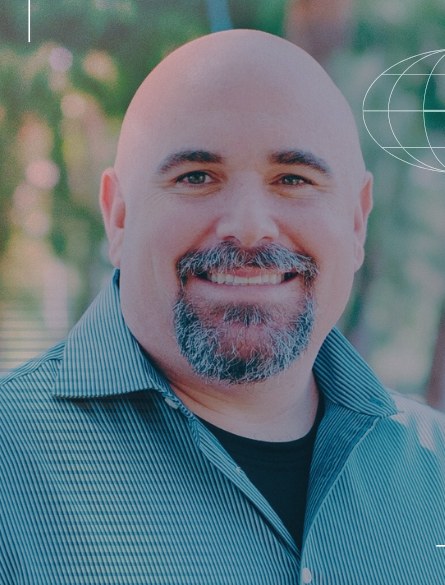
Founder of Humble Disruption and theChurch.digital. 25 years in church production, communications, and digital — and the builder behind Multiply. More about Jeff →