Digital discipleship
What AI can do for your church... and what it never will.
Every pastor I sit with has already made up their mind about AI before we start, and they have made it up in one of two directions. Either it is going to save them fourteen hours a week, or it is going to hollow out their ministry and put a machine in the pulpit.
Both of those are sales pitches. One is being sold by vendors and one is being sold by people warning you about vendors, and neither has spent a year watching what actually happens in a church that uses it.
So let me just draw the two columns. No hype, no fear, and I will show my own scars on the way through.
I should say up front that I build this stuff, so you are entitled to discount me accordingly. What I would ask is that you discount the enthusiasm and keep the second column, because the second column is the part I had to learn the expensive way.
What it genuinely does
It transcribes. This one is unglamorous and it is the biggest. Your church has years of preaching that exists only as audio, which means it is invisible to every search anyone will ever run. A transcript turns a Sunday into something a person can find on a Tuesday at two in the morning. Nothing new has to be preached... the sermon already happened.
It drafts. Not writes. Drafts. It will take Sunday's message and give you a devotional shaped like a devotional, small-group questions shaped like questions, a family question for the car. Every one of those still needs a human being to read it and fix the two sentences that are subtly not your church. But there is a real difference between editing something and staring at an empty page at 9pm on a Thursday.
It adapts across languages. Carefully worded, because this is where most churches get burned. It does not translate well if you hand it a paragraph and walk away. It adapts well when a person who speaks the language reads it afterward. That distinction is the whole ballgame for a bilingual church, and I will come back to it.
It notices things at a scale you cannot. Who has opened the devotional eleven days running and never joined a group. Which question in a study got the most replies. Not judgments... just patterns, handed to a human who then decides whether to make a phone call.
It answers at two in the morning. Your church cannot staff that hour. The pages you publish can.
That last one deserves more than a line, because it is the one churches underestimate. Your website is the only member of your staff that works at 2am, and for most churches it is asleep too. Somebody in your city is awake right now with a question they will not bring to your lobby. Either there is something of yours in front of them or there is something of somebody else's, and the somebody else is rarely trying to get them into a room.
What it will never do
It will never disciple anybody. I want to be unambiguous, because this is the one people hedge on. Discipleship is a person walking with a person over time, noticing what they are avoiding, asking the second question. No system produces that. Ours does not either.
It will never pray with anybody. It can route a prayer request to a human being in under a minute, which is genuinely useful. The praying is not the part it does.
It will never show up at the hospital. Nothing on a server has ever sat in a waiting room at 4am. Your people know the difference between being messaged and being visited, and they know it instantly.
It will never be your pastor's voice. It can carry your pastor's words further than they would otherwise travel. It cannot invent them. A church that lets it try ends up with content that sounds like everybody else's content, which is the specific fate the whole exercise was supposed to avoid.
Where the line actually sits
Pastor, here is the sentence I would put on the wall if I could only leave one: AI drafts, people shepherd. Every failure I have seen in a church using these tools is that sentence running backwards.
Inside Multiply it sits in the middle of the system as a traffic cop. Directing. This way, not that way. It takes the sermon that a human preached, produces the surfaces that carry it, and routes people toward other people. It never stands at the front, and it never takes the last step with anybody. I have written elsewhere about whether that makes the ministry soulless, so I will not relitigate it here... short version, the soul was never in the typing.
I have watched that sentence run backwards in practice and it is not dramatic, which is what makes it dangerous. Nobody announces that people have stopped shepherding. It just gets quieter. The devotionals keep going out, the numbers hold steady for a while, and eighteen months later somebody realises nobody has actually called anyone.
Two rules keep the cop honest, and if a vendor will not commit to both of them in writing, walk.
First, the source is the pastor. The system does not generate ministry out of nothing. It multiplies something a human being already said, which means your voice stays the origin of everything downstream.
Second, every AI-assisted word gets human eyes before a congregation sees it. Every one. I confess I have been tempted to relax that on a busy week, and the week I relax it is the week something goes out with a phrase your church would never use, and a member notices, and the trust costs more than the hour saved.
The question nobody asks first
Most churches ask me which tool to buy. Wrong first question. The first question is: what does a week at your church actually look like, and where in it is a real human being staring at a blank page?
Find that. That is where this helps. Everywhere else it is a solution wandering around looking for a problem, and you will pay a subscription for the privilege.
None of that is a limitation anyone will fix in a later version, by the way. It is not a gap in the technology. It is a category difference, and pretending otherwise is how churches end up disappointed in a tool that was doing exactly what it said.
One more piece of honest math while we are here. These tools cost money every month, forever, and the subscription does not care whether you used it. Before you buy anything, work out what hour of whose week it gives back. If you cannot name the hour and the person, you are not buying a tool... you are buying a feeling.
And if you are still uneasy, I would rather you stayed uneasy than got talked out of it by somebody with a product. Uneasy pastors ask better questions, and the questions are what keep the human parts human.
So, Pastor, one question for your staff this week. Where is somebody on your team starting from a blank page on a Thursday night? That is the only place this is worth talking about. What did you find? I would like to hear it.
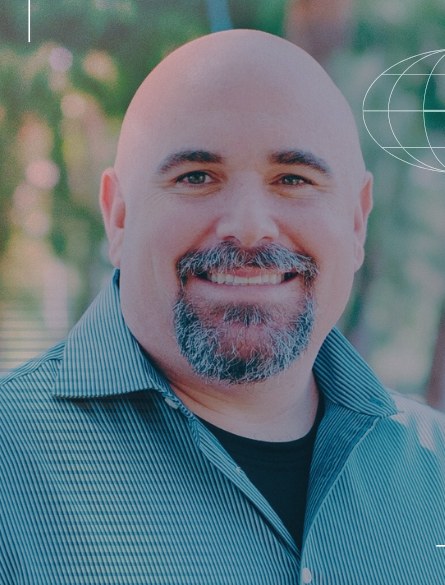
Founder of Humble Disruption and theChurch.digital. 25 years in church production, communications, and digital — and the builder behind Multiply. More about Jeff →