Church SEO
Your sermon is public. Your settings say it isn't.
It's funny. This week I was helping a church I'm working with, and I needed something simple: the transcript of one of their sermons. A sermon preached in front of a room full of people. Streamed live. Posted online for anybody on earth to watch.
So I pointed a tool at the video and asked for the words.
Locked.
I tried a different door. Locked. I tried the way an ordinary web browser would come at it. Locked. I tried the way an AI answer engine comes at a church's content when a searching person asks a question at midnight.
Locked, locked, locked.
I spent the better part of an afternoon on it before I stopped and actually looked at the video's settings, which is its own small confession about how long I'll bang on a door before checking whether somebody bolted it.
Pastor, hear the strange part. Nothing was broken. Every lock was working exactly as designed. Somebody, years ago, probably for a perfectly good reason, possibly just by clicking "next" on a default, had told the video platform that this sermon may only be shown in one place, to one kind of visitor, under one set of conditions.
The sermon was public. The settings said it wasn't.
I'm not throwing rocks here
Confession time. I've set those locks myself. Twenty-five years in church production and communications, and I have absolutely restricted embeds, unlisted videos, tightened permissions... usually on a Tuesday, usually to solve one specific problem that week, and then I moved on and never thought about it again.
Nobody audits a door that never gets knocked on.
Except the doors are getting knocked on now. Constantly. By things that did not exist when we set the locks.
Just weeks ago I found my own website... a site I had tuned obsessively for search, a site I am paid to have opinions about... silently turning away every AI crawler on the internet. I never chose that. My hosting provider ships that way by default, and it never once occurred to me to check. I had hung a "no visitors" sign on my own front door and then spent months wondering why so few visitors came.
This week was that same discovery from the other side. It isn't one setting. It's a whole category of them, sitting across video platforms, hosting dashboards, and a text file most churches have never opened.
Who actually gets turned away?
Let's be honest about what these locks were built for. Embed restrictions stop people from passing your content off as their own. Unlisted videos keep the rough cut away from the congregation until it's ready. Bot-blocking keeps scrapers from eating your bandwidth and your budget. Real problems. Reasonable tools. Nobody was being paranoid.
But walk through who actually hits those locks in 2026.
A family new to town asks an AI assistant where they should go to church. The engine goes to read your sermons... and gets a door in the face. It quotes the church down the road instead. And Pastor, that isn't a competition problem. We don't compete with the church down the road; I'd rather that family land somewhere good than nowhere at all. We compete with the world's answers... and the world's answers do not have their embeds restricted.
A ministry tool tries to turn Sunday's sermon into a devotional, a study guide, a week of discipleship for people who were in the room and people who weren't. It can't read the source. The week never happens.
Your own future staff member searches for that message from two years ago, the one everybody still talks about. Unlisted. Invisible. Functionally gone, even though the file is sitting right there on the server, paid for, backed up, and unreachable.
Not one of those visitors is a thief. They are the exact people the sermon was preached for... and the settings cannot tell the difference.
"Jeff, those settings exist for a reason." Some of them absolutely do. Keep the rough cuts unlisted. Keep the members-only content gated, if it is genuinely members-only. But a weekend sermon? That's the most public thing your church produces all week. Matthew 28 opens with a go, not a gate. Locking down the sermon is like printing the bulletins and keeping them in the safe.
Walk the building and check the doors
I'm not going to hand you four easy steps... you know how I feel about recipes. But any church can walk its own building this week and rattle three handles.
The video platform. On Vimeo, open a sermon and look at two settings: privacy, and "where can this be embedded." If the answer to the second one isn't "anywhere," you have already decided who may hear that sermon, and the list is shorter than you think it is. On YouTube, check visibility... an unlisted sermon is not a humble sermon. It's an invisible one. Search can't see it. AI can't quote it. Only people who already have the link can reach it, and the searching family does not have the link.
The wall in front of your website. If you're on Cloudflare, and W3Techs will tell you that's roughly 1 in 5 websites on the internet, there is a switch that blocks AI crawlers and it has been flipped on for you. Your robots.txt can say "welcome, come in" all day long; the wall out front never reads it. Thirty seconds to check. One toggle to fix.
The words themselves. A sermon that exists only as video is locked in a second, quieter way... there's no text for anything to read. A transcript on a page is the whole difference between watchable and findable. At Christchurch Miami, transcripts are the reason a message from two years ago still turns up and answers somebody's question on a Tuesday afternoon.
Three doors. That's the whole audit. If you want the thirty-second version, I built a free checker that knocks on your site's door the way an AI does and tells you exactly what happens: check your church here. And if you want the fuller picture of how people are finding churches now, I wrote that one up too.
The lock you forgot you set
Here's what stays with me from this week. Nobody at that church decided to hide their preaching. No board voted to be unfindable. No one is asleep at the switch. A good person clicked a reasonable setting during a busy week, years ago, and the church has been quietly turning away its most important visitors ever since... while everyone assumed the doors were open, because from the inside, they always look open.
That's the part worth sitting with. Not the setting. The blind spot. We audit our budgets and our background checks and our fire exits, and not one church I know has ever put "walk the digital doors" on an annual checklist.
The mission field moved onto platforms that have privacy settings. Which means somebody at your church is now the keeper of the doors, whether anybody ever gave them that title or not.
This is the Find step of the pathway, and it is the cheapest step there is to fix. Search. Seat. Savior. Surrender. starts with a stranger finding you at all... and a person who can't find you never takes a seat, never hears the gospel preached in a room, never surrenders anything to anybody. Multiply exists to build that whole road. But no road works through a locked gate, and unlike most things on your list, this gate costs nothing to open.
So... who at your church knows where the locks are? And when is the last time anyone walked the building?
If the answer is "nobody" and "never," don't panic. It's a Tuesday afternoon with a checklist. But it might be the highest-leverage Tuesday afternoon on your calendar this fall. Walk it this week, then come tell me what you found... I'd genuinely like to know.
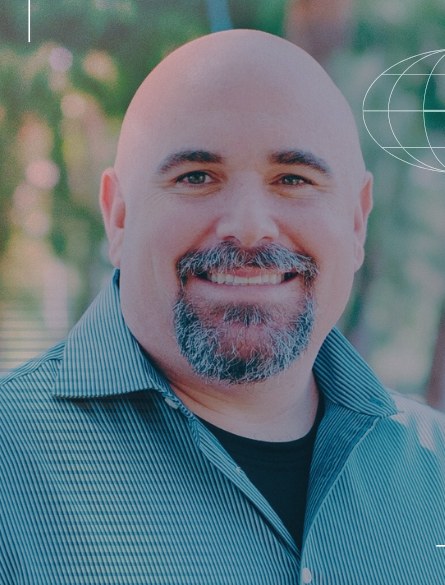
Founder of Humble Disruption and theChurch.digital. 25 years in church production, communications, and digital — and the builder behind Multiply. More about Jeff →